
Retatrutide Explained: The Triple Agonist (GIP, GLP-1, Glucagon) and Where It Stands in 2026
Retatrutide is the triple agonist generating the biggest weight-loss headlines. Learn how it works, what trials show, its FDA status, and what to ask before you start.
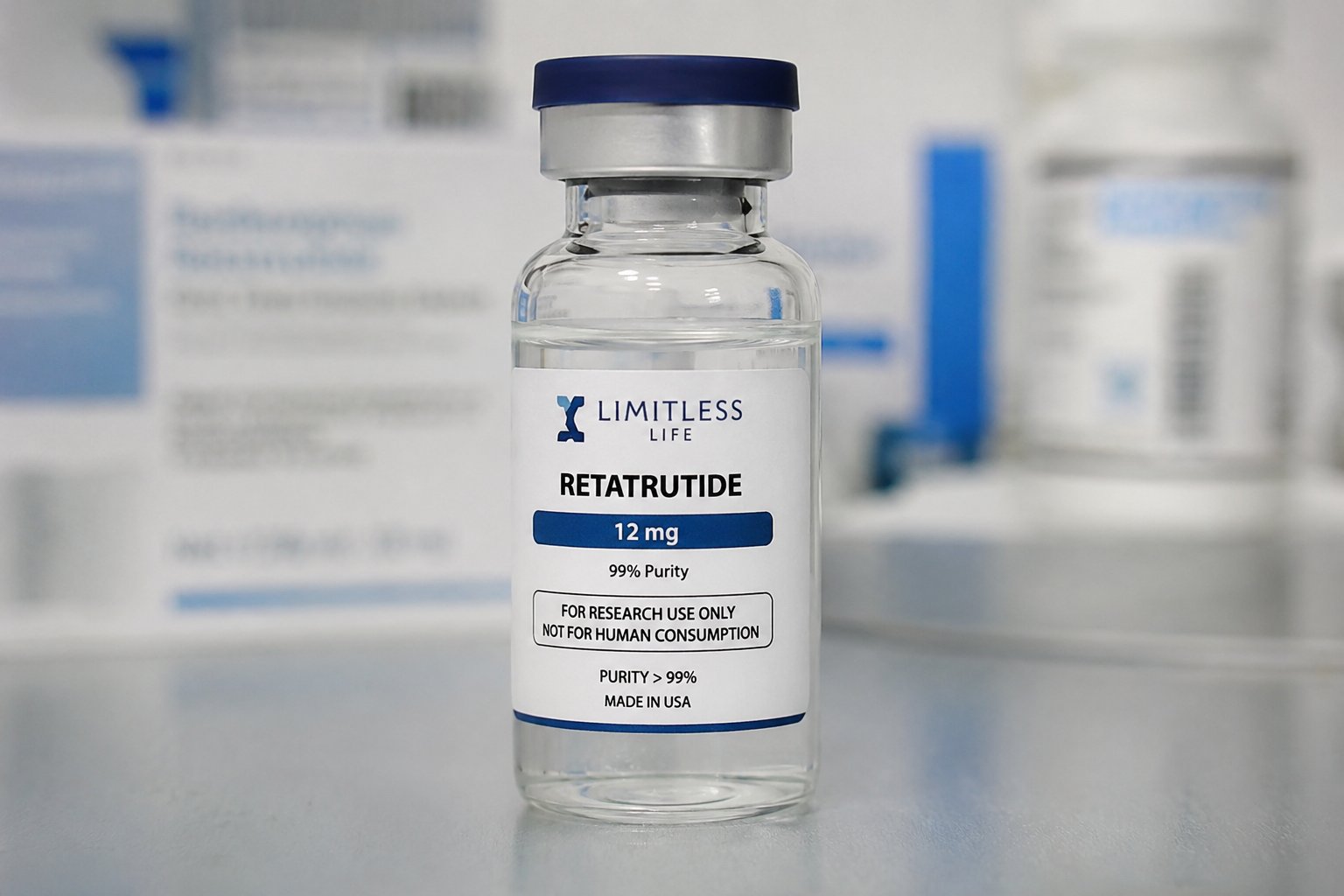
If you have spent any time researching the next wave of weight-loss medications, one name keeps surfacing: retatrutide. It is the molecule producing the largest weight-loss numbers ever recorded in obesity trials, and the headlines have run well ahead of the facts. So what is it, how is it different from the medications you already know, and where does it actually stand right now?
This guide breaks down retatrutide in plain language. We will cover how the triple agonist mechanism works, what the clinical trials have shown, its current regulatory status, the safety profile that is still being mapped, and the practical questions worth asking before you consider it. The goal is clarity, not hype.
1. What Retatrutide Is (and the "Triple Agonist" Part)
Retatrutide is an injectable medication in development by Eli Lilly for obesity and weight-related conditions. The reason it gets so much attention comes down to one word: triple. Most weight-loss medications you have heard of act on one or two hormone pathways. Retatrutide acts on three at once.
Semaglutide, the active ingredient in Wegovy and Ozempic, is a single agonist. It activates the GLP-1 receptor, which reduces appetite and slows how fast your stomach empties. Tirzepatide, the active ingredient in Zepbound and Mounjaro, is a dual agonist. It hits both GLP-1 and GIP, a second metabolic pathway that appears to add to the effect. You can read our full breakdown of those two in tirzepatide vs semaglutide for weight loss.
Retatrutide goes one step further. It activates GLP-1, GIP, and a third receptor: glucagon. That glucagon component is the new piece. While glucagon is often associated with raising blood sugar, in this context it is thought to increase energy expenditure and help the body burn stored fat, including fat in the liver. That third lever is the leading theory for why retatrutide has posted such large numbers in studies.
2. What the Clinical Trials Actually Show
The early signals were striking. In a Phase 2 study, participants on the highest dose lost roughly a quarter of their body weight over about a year, surpassing what semaglutide and tirzepatide produced in their own respective trials. That alone was enough to put retatrutide on every metabolic researcher's radar.
The bigger picture is now coming from the Phase 3 TRIUMPH program, a series of large, randomized trials. The first successful readout reported an average weight reduction near 29 percent of body weight, with notable improvements in physical function and pain for participants who also had knee osteoarthritis. A later pivotal obesity readout reinforced the pattern, with participants on the top dose losing an average around 70 pounds over roughly 80 weeks, and close to half reaching weight loss levels usually associated with bariatric surgery.

A word of caution on those numbers. Comparing results across separate trials is not the same as a head-to-head study. Different patient groups, different trial designs, and different time frames all make direct comparison imperfect. Retatrutide looks remarkably effective, but the cleanest comparison would require studying it against tirzepatide and semaglutide in the same trial, which has not been done at scale yet.
3. The Current FDA Status: Important to Get Right
Here is the part that matters most before anyone gets ahead of themselves. As of 2026, retatrutide is not FDA approved. It is investigational, meaning it is still being studied and has not been cleared as safe and effective by the agency's standard.
The TRIUMPH program is expected to report several more Phase 3 readouts through 2026. Industry projections point to a possible FDA submission around late 2026 or early 2027, with any approval decision unlikely before late 2027 and a market launch potentially in 2028. Those dates can shift based on trial outcomes, safety findings, or requests for additional data.
Because it is not approved, retatrutide cannot be obtained as a finished brand-name product. The only legitimate routes today are participation in an approved clinical trial or access through a compounding pharmacy under specific legal frameworks. If you ever see a seller advertising "FDA-approved retatrutide," that is a red flag and a reason to walk away. The same scam-avoidance rules apply here as anywhere else in this space, which we cover in how to get GLP-1 medication online safely.
4. Compounded Retatrutide: What It Means
Because there is no approved finished product, the retatrutide available through telehealth today is compounded. Compounded medications are prepared by licensed pharmacies rather than mass-manufactured by the original drug maker. That model has both upsides and trade-offs, and it is essential to understand them before starting.
The honest version: compounded products are not FDA-approved finished drugs, so the same batch-level review that applies to a brand-name pen does not apply in the same way. That makes the credibility of the prescribing platform and the pharmacy it works with the single most important factor. We walk through the safety questions to ask in detail in compounded GLP-1s: what it means and questions to ask.
At StemVera Health, retatrutide is offered as part of a clinician-guided program with ongoing support rather than a one-and-done purchase. You can see how that works on our Retatrutide / B12 therapy page , and review the broader set of options on our weight loss solutions hub. Eligibility is determined through a clinical review, not a checkout button.
5. Side Effects and the Safety Profile Still Being Mapped
Retatrutide shares the gastrointestinal side-effect pattern common to this whole class. The most frequently reported effects in trials were nausea, vomiting, diarrhea, and constipation, generally worst during dose increases and often improving as the body adjusts. Most trial participants continued treatment despite these effects, but they are real and worth planning for. Our practical guides on managing nausea and constipation apply to retatrutide as much as to any GLP-1.
Two newer considerations are specific to retatrutide. Trials have noted a signal for dysesthesia, an abnormal skin sensation such as tingling or heightened sensitivity. And because of the glucagon component, researchers are watching its effect on heart rate carefully. These are exactly the kinds of questions that long-term Phase 3 and post-approval data exist to answer, and they are a reason the regulatory timeline is deliberate rather than rushed.
6. Is Retatrutide Right for You to Consider?
For most people, the practical answer in 2026 is to start with what is approved and available now, and to treat retatrutide as a serious option to watch. Tirzepatide and semaglutide are FDA-approved, have years of real-world use behind them, and produce substantial results for many patients. If you are early in your journey, those are usually the sensible first conversation.

That said, for people who have not reached their goals on existing options, or who are mapping out where the field is heading, retatrutide is genuinely worth understanding. If you are weighing a switch between current medications, our guide on when switching makes sense is a useful companion. And before starting any of these, the practical mechanics of dosing and self-injection matter, which we cover in the GLP-1 dosing and titration guide and how to inject at home.
The Bottom Line
Retatrutide represents the leading edge of obesity medicine: a triple agonist with trial results that genuinely stand out from the pack. But "leading edge" and "available, proven, and approved" are not the same thing yet. The smart move is to understand it clearly, treat any current access as a clinician-supervised decision, and avoid anyone selling certainty that the science has not delivered.
If weight loss is your goal, the best next step is a clinical conversation about what fits your situation today, with an eye on what is coming. You can start that process through StemVera Health's telehealth platform on our get started page, or learn more about how our telehealth platform works.
This article is educational and is not medical advice. Retatrutide is investigational and not FDA approved. Treatment decisions should be made with a licensed clinician who can review your full history. See our medical disclaimer for details.
Frequently asked questions
Related treatments
Explore the clinician-supervised programs StemVera offers for the conditions and medications discussed in this article.