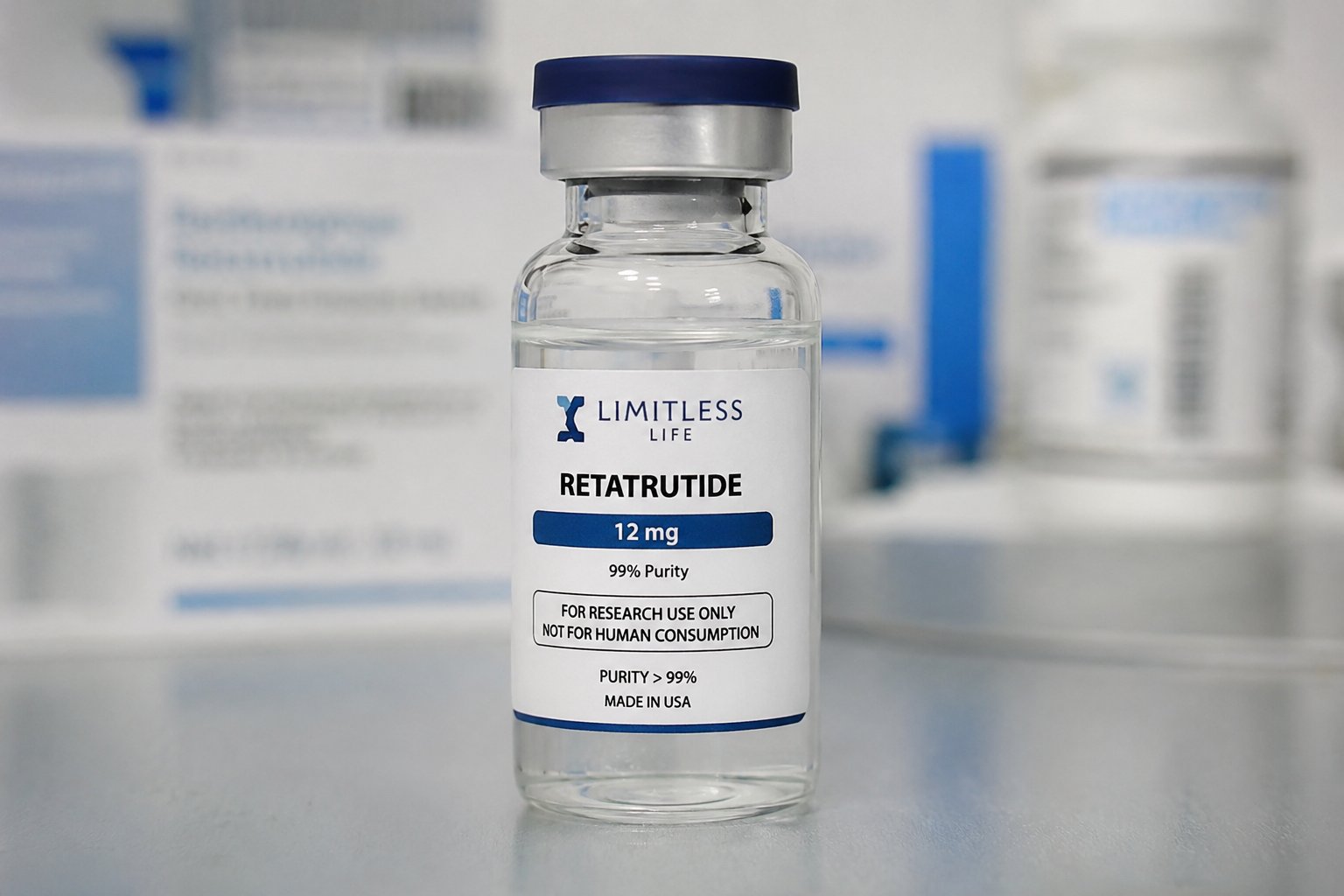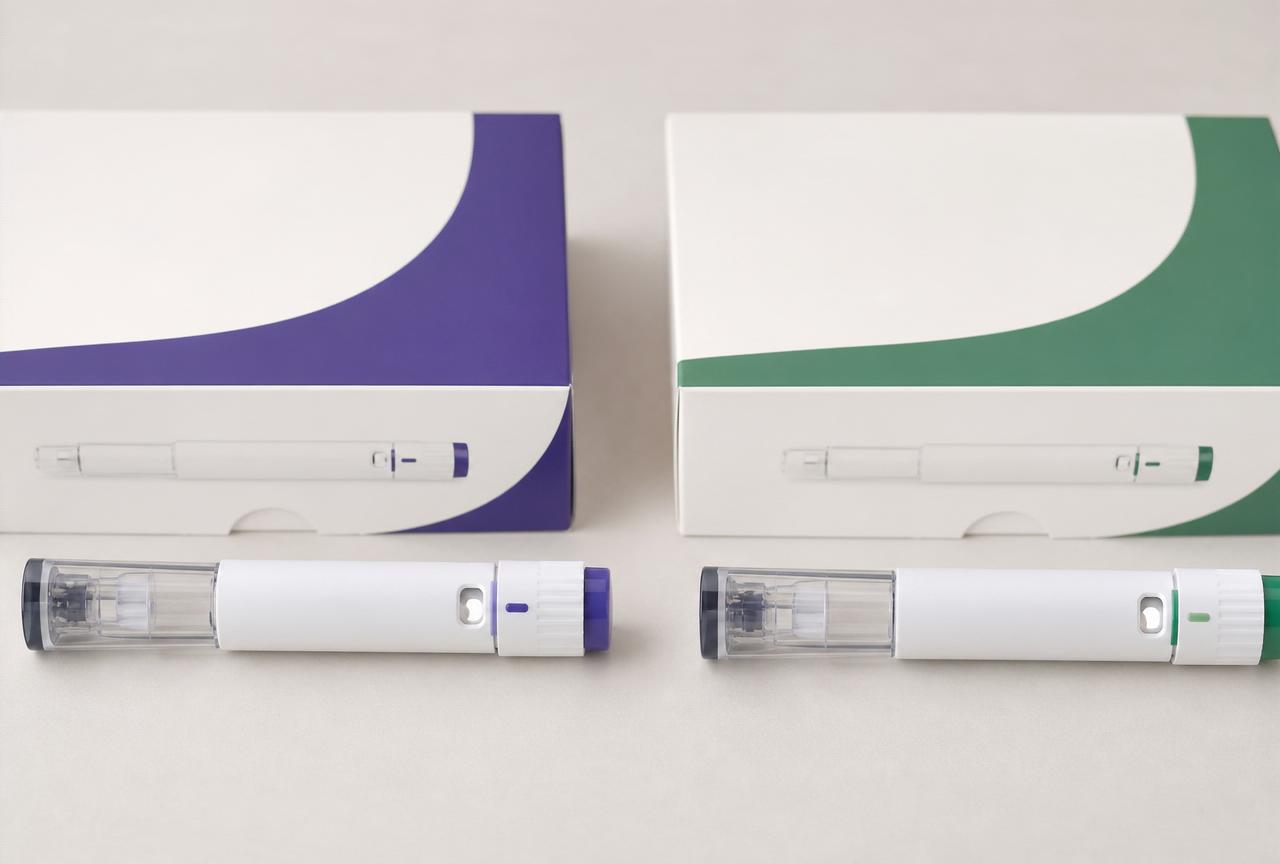
Retatrutide + B12: Investigational Triple-Pathway Therapy (Not FDA-Approved)
If you’ve heard about “triple-agonist” therapies and want clear, medically responsible guidance, this page explains what retatrutide is, what’s known (and unknown), and the safer next steps to pursue weight-management treatment with clinician oversight.
Retatrutide is investigational and is not FDA-approved for any condition. Use of investigational drugs should occur only in appropriate settings under qualified medical supervision. Do not buy unapproved medications online. Results vary.
Explore Approved Options
Clinician review to match you with appropriate, legal options
Evidence-based guidance + safety-first screening
Discreet care coordination and follow-up support
Availability varies by state and by treatment type.
Plan selection (Compliance hold)
- Dosage Description
- 1mg SQ Weekly for 4 weeks
- Dose
- 1
- Duration
- 4 Week
- Package Size
- 2
- Form
- Injection
- Dosage Description
- 2mg SQ weekly for 4 weeks
- Dose
- 2
- Duration
- 4 Week
- Package Size
- 2
- Form
- Injection
- Dosage Description
- 4mg SQ weekly for 4 weeks
- Dose
- 4
- Duration
- 4 Week
- Package Size
- 2
- Form
- Injection
- Dosage Description
- 8mg SQ weekly for 4 weeks
- Dose
- 8
- Duration
- 4 Week
- Package Size
- 2
- Form
- Injection
- Dosage Description
- 12mg SQ weekly for 4 weeks
- Dose
- 12
- Duration
- 4 Week
- Package Size
- 2
- Form
- Injection
What is Retatrutide + B12?
Retatrutide is an investigational medication being studied for weight management and metabolic health. It’s often described as a “triple-agonist” because it targets three hormone pathways involved in appetite and metabolism. Because it is investigational, there is no FDA-approved retatrutide product and no FDA-approved dosing.
Vitamin B12 is a nutrient involved in normal red blood cell formation and energy metabolism. In medical practice, B12 is used to treat or prevent B12 deficiency. B12 is not a weight-loss medication, and it does not replace nutrition, sleep, and activity foundations.
Compounded products are not FDA-approved and do not undergo FDA premarket review for safety/effectiveness/quality. Retatrutide is investigational; results vary.
Who this information is for
This page is helpful if you:
- Keep hearing about retatrutide and want a clear, safety-first explanation
- Want to understand how it differs from current GLP-1 options
- Need guidance on what is appropriate and available today with licensed clinician oversight
Who should avoid GLP-1-type therapies unless a clinician says otherwise
A clinician may rule out GLP-1-pathway medications (or require special monitoring) if you:
- Are pregnant, trying to become pregnant, or breastfeeding
- Have a personal/family history of medullary thyroid carcinoma (MTC) or MEN2
- Have a history of pancreatitis or significant gallbladder disease
- Have significant kidney disease or frequent dehydration episodes
- Use insulin or sulfonylureas (risk of low blood sugar)
- Have severe gastrointestinal disease or cannot tolerate GI side effects
- Have upcoming procedures requiring anesthesia or deep sedation (discuss timing and safety with your care team)
What you get with StemVera (safety-first guidance)
Included:
- ecure online intake (health history + medications + goals)
- Clinician review to assess risk factors and appropriate options
- Discussion of FDA-approved, evidence-based treatments when appropriate
- Follow-up support and safety monitoring for prescribed therapies
- Secure messaging for questions and care coordination
- Want to understand the full process? See How It Works
- Compare Approved Options
How to get started safely
- 1
Complete your intake
Share your medical history, current medications, and goals.
- 2
Clinician review
A licensed clinician evaluates what is appropriate, safe, and available for you today.
- 3
Choose an approved path
If eligible, your clinician may recommend an FDA-approved medication option and a practical plan to support consistency.
- 4
Ongoing support
Use only as prescribed. Check-ins help monitor side effects, tolerance, and progress.
Weight-loss “basics” that matter regardless of medication
- Prioritize protein and fiber to support fullness
- Hydrate consistently (especially if appetite drops)
- Strength training to support lean mass
- Sleep consistency (sleep disruption can worsen cravings)
- Build sustainable routines (small changes you can repeat)
Results timeline and expectations
Because retatrutide is investigational, outcomes and long-term safety are still being studied. Even with FDA-approved therapies, response varies widely and depends on:
- Medical history and baseline metabolic health
- Nutrition, activity, sleep, stress, and consistency
- Side-effect tolerance and clinician-guided adjustments when appropriate
- No medication can guarantee a specific amount or rate of weight loss.
Possible side effects (based on GLP-1-pathway therapies)
Common
- Nausea
- Constipation or diarrhea
- Stomach discomfort, bloating, or reflux
- Decreased appetite
- Headache or fatigue
Less common but serious (seek medical help)
- Severe, persistent abdominal pain (possible pancreatitis or gallbladder issues)
- Severe vomiting/diarrhea with dehydration symptoms (dizziness, fainting, reduced urination)
- Allergic reaction (rash, swelling, trouble breathing)
- Symptoms of low blood sugar (more likely with insulin/sulfonylureas):
- shakiness, sweating, confusion, fast heartbeat
If side effects feel severe or persistent, contact your care team promptly.
Safety and important warnings
- Retatrutide is investigational and not FDA-approved for any condition. - Do not purchase unapproved “research” medications online. Product quality, identity, and sterility can be unknown and dangerous. - GLP-1-pathway medications carry important warnings and are not appropriate for everyone.
- Do not use GLP-1-pathway medications if:
- You or a family member has had medullary thyroid carcinoma (MTC)
- You have Multiple Endocrine Neoplasia syndrome type 2 (MEN2)
- You’ve had a serious hypersensitivity reaction to a GLP-1 medication
- Use caution and tell your clinician if you have:
- History of pancreatitis
- Gallbladder disease or gallstones
- Kidney disease or frequent dehydration
- Diabetes and use insulin/sulfonylureas (low blood sugar risk)
- Severe GI disease or significant constipation
- Upcoming surgery/anesthesia (these medications can slow stomach emptying)
- If compounded medication is prescribed, compounded products are not FDA-approved and do not undergo FDA premarket review for safety, effectiveness, or quality. Off-label use may occur; results vary.
Compare weight management medication options
Semaglutide Injection
A GLP-1 option that may support appetite control with clinician oversight.
Semaglutide Injection
Tirzepatide Injection
A dual-pathway option (GIP + GLP-1) that may be appropriate for some eligible patients.
Tirzepatide Injection
Liraglutide Injection
A daily GLP-1 option for eligible patients who prefer a daily routine (as prescribed).
Liraglutide Injection
Start your visit
Share a few details and we will hand you off securely to our clinical portal to complete your visit. Marketing information only.
All medical and health details are collected on the next step, in our HIPAA-protected clinical layer. Please do not include any medical or health details here.
Frequently Asked Questions
From the StemVera blog
Background reading on the conditions, side effects, and decisions this treatment is tied to.