Maintaining Your Weight Loss After GLP-1s: A Science-Backed Plan That Works
Maintain your GLP-1 weight loss results after stopping semaglutide or tirzepatide. Learn the three-phase transition strategy, nutrition framework, exercise plan, and behavioral tactics that prevent weight regain.
The weight loss results on semaglutide or tirzepatide can feel miraculous. But the hardest conversation often happens before you ever stop: what comes next. Research shows that after GLP-1s, most people regain weight if they don't have a structured plan. But regain isn't inevitable. This guide covers the science behind post-GLP-1 weight maintenance and a specific strategy that works.
1. What the Research Actually Shows About Weight After Stopping GLP-1s
Let's start with the honest numbers. In major trials, people who stopped semaglutide or tirzepatide regained approximately 50 to 70 percent of the weight they lost over 12 months without intervention. The regain wasn't always rapid. Some people held their weight for a few months before starting to regain. Others saw steady creep upward immediately. The pattern depends on your individual metabolism, how long you were on the medication, and what habits you built during treatment.
But here's the critical distinction: regain without a plan is not the same as regain with structure. People who transitioned from GLP-1s with a pre-planned maintenance strategy, including adjusted nutrition, strength training, and behavioral support, kept 60 to 80 percent of their weight loss two years later. That's the gap between hoping for the best and actually planning for success.
The biology matters too. GLP-1s change your appetite set point while you're taking them. Your brain adapts to a lower drive to eat. When the medication leaves your system, your appetite signals gradually return to something closer to baseline. But "closer to baseline" doesn't mean identical to your pre-treatment baseline. Your new lower body weight changes how many calories you burn at rest. Your exercise habits from treatment phase have potentially built muscle and endurance capacity. These changes persist even after the medication stops.
2. The Three-Phase Maintenance Strategy: Before, During, and After Your Last Dose
Successful weight maintenance after GLP-1s isn't something you start thinking about once you've stopped. It begins during your treatment. Here's how to structure it.
Phase One: Build Your Foundation (Months 1-3 on GLP-1). While you're on the medication and appetite is suppressed, invest in the habits that will sustain your results later. Focus on three things: First, protein. Aim for at least 0.8 to 1.0 gram per pound of body weight daily. This protects muscle during rapid weight loss and becomes your anchor during maintenance. Second, strength training 2 to 3 times per week. Progressive resistance work during the GLP-1 phase builds lean mass that will be harder to lose later. Third, regular walking or other low-intensity movement daily (30 minutes minimum). These habits feel easy on the medication, but they're actually creating your post-treatment blueprint.
Phase Two: Metabolic Stability (Month 4 through your last dose). Once your body adapts to your current dose and rapid weight loss slows, shift focus from just "losing weight" to "how am I actually eating?" Start tracking not just calories but macronutrient distribution, how much protein, carbs, and fat at each meal. This isn't about restrictive counting forever. It's about knowing your patterns so you can recognize drifts later. Increase the variety of foods you eat. The more diverse your diet now, the more options you'll have for sustainable eating when appetite normalizes. Continue and intensify strength training; prioritize consistency over perfect form or heavy loads.
Phase Three: Transition Planning (6-8 weeks before your last dose). Work with your clinician to plan the specific dose schedule you'll follow as you taper off. Some people stop abruptly; others step down gradually over weeks. A gradual taper can help your appetite adjust in stages rather than all at once. During this phase, begin intentionally eating at a slight surplus from your current GLP-1 eating level, maybe 100 to 200 extra calories daily from nutrient-dense sources (eggs, salmon, nuts, Greek yogurt). This small increase lets you experience hunger cues returning without shocking your system. Track your appetite changes and energy levels carefully. You're gathering data about how your body responds as the medication leaves your system.

3. The Post-GLP-1 Nutrition Framework That Actually Works
Once the medication is out of your system, your appetite will likely feel different. For some people, it returns to pre-treatment levels. For others, it stays somewhat reduced. Either way, you need a nutrition framework that feels sustainable, not restrictive, but intentional.
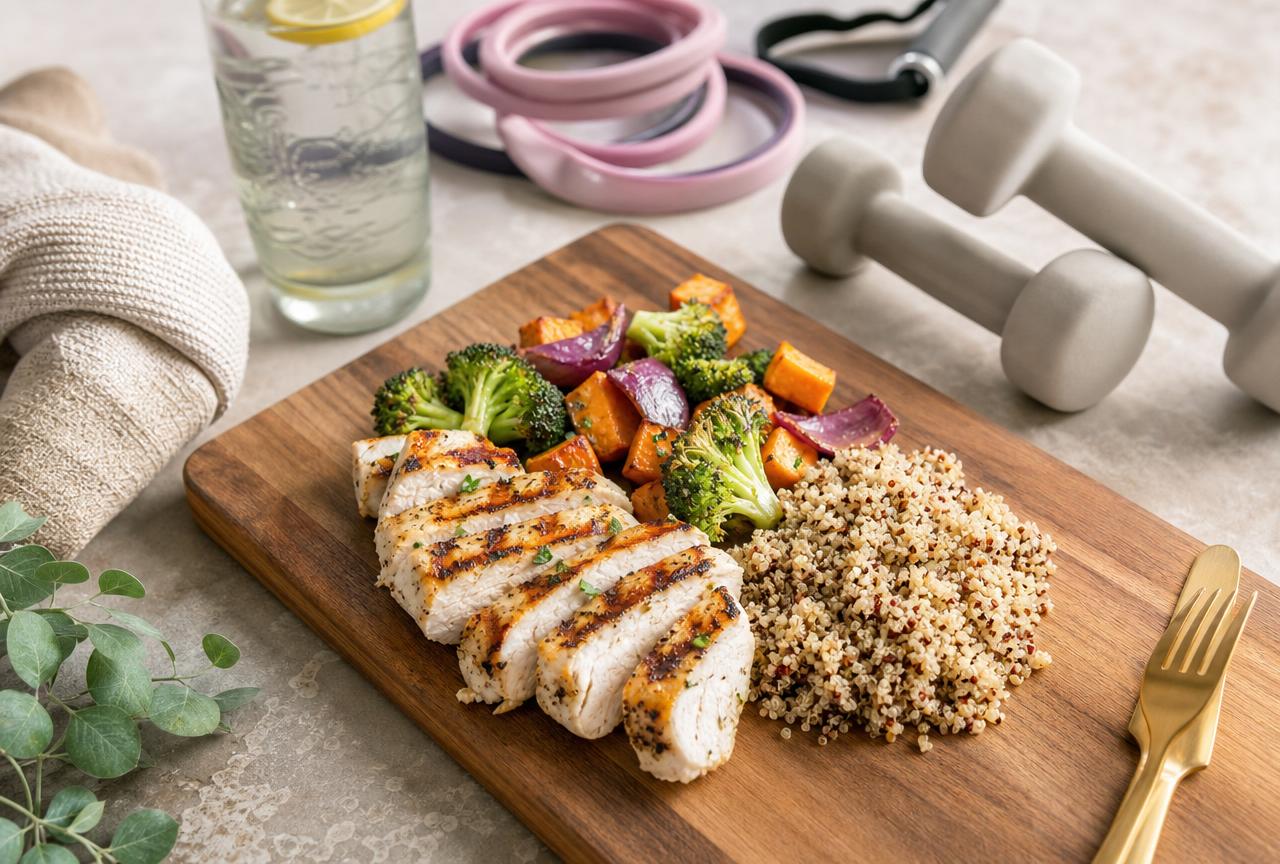
Protein as your primary target. Every meal and snack should include a protein source. Aim for 25 to 35 grams per meal and 10 to 15 grams per snack. Protein does three things simultaneously: it increases satiety (you feel fuller longer), it preserves muscle mass during maintenance, and it has the highest thermic effect of any macronutrient (your body burns more calories digesting it). When appetite returns and your food volume increases naturally, high-protein eating is your safety net.
Carbs aren't the enemy, but portion-size matters. Many people who lose weight on GLP-1s develop a fear of carbohydrates. That's misplaced. During your treatment, restricted appetite naturally controlled carb intake. Post-treatment, you'll be eating more carbs again, and that's fine, as long as portions are intentional. Aim for complex carbs (whole grains, oats, legumes, vegetables) and pair them with protein and fat to slow absorption and extend satiety. A practical target: carbs at about 35 to 45 percent of your daily calories, with emphasis on fiber-rich sources.
Don't go fat-free, but be aware of density. Dietary fat is calorie-dense (9 calories per gram vs. 4 for carbs and protein). You don't need to fear fat, but you do need to portion it intentionally. Use measured fats in cooking (olive oil by the tablespoon, not poured freely). Choose fat sources that include other nutrients: avocado, fatty fish, nuts, seeds, whole eggs. Aim for about 25 to 35 percent of calories from fat.
Ultra-processed foods and liquid calories need a policy. You didn't restrict these aggressively on the GLP-1 because appetite naturally suppressed them. Post-treatment, as hunger returns, ultra-processed foods (chips, pastries, candy, soda) will be more tempting. Have a clear policy: maybe you allow them 1 to 2 times weekly, or maybe you've learned they genuinely trigger overeating and you choose to avoid them. There's no universal rule. But deciding ahead of time, rather than deciding in the moment, is what works.
4. Exercise During the Transition and Beyond
Strength training, which you started during your GLP-1 phase, is non-negotiable for maintenance. Muscle tissue is your metabolic engine. Every kilogram of lean mass burns roughly 10 calories at rest daily. More muscle means you can eat more calories at maintenance without gaining weight.
Minimum effective dose: 2 to 3 sessions weekly of resistance training (weights, resistance bands, or bodyweight work targeting major muscle groups). Each session 30 to 45 minutes. Focus on compound movements: squats, deadlifts, chest presses, rows, overhead presses. Progressive overload matters, gradually increasing weight or reps over months tells your muscle it needs to stay strong and large.
Cardiovascular activity adds consistency. 150 minutes weekly of moderate-intensity activity (brisk walking, cycling, swimming) or 75 minutes weekly of vigorous activity. This supports heart health, improves insulin sensitivity, and acts as a calorie buffer. Importantly, aerobic activity is much easier to sustain long-term than it was before weight loss, you're carrying less weight, so movement feels less effortful.
Daily movement is the hidden anchor. Beyond structured exercise, aim for 7,000 to 10,000 steps daily through normal activity. This accumulated movement is often underestimated in its importance. It's also highly individual: some people find this happens naturally once they're at a lower weight; others need to build it intentionally.

5. Behavioral Strategies That Prevent Creep
The difference between people who maintain their weight loss and those who regain often comes down to behavioral practices. These aren't about willpower. They're about structure that makes maintaining easier than regaining.
Weekly weigh-ins with a rebound rule. Weigh yourself once weekly (same day, same time, ideally in the morning). Track the number without judgment. If you see a gain of 3 to 5 pounds from your lowest weight, this is your signal to tighten portions and increase activity for 1 to 2 weeks. Small corrective action prevents small gains from becoming big ones.
Quarterly body composition checks. Scale weight can fluctuate due to water, hormones, and training cycles. Every three months, get a body composition assessment (DEXA, bioimpedance, or even progress photos and measurements). This reminds you that the goal isn't a specific number, it's maintaining muscle while managing fat.
Meal planning on Sunday. Spend 30 minutes weekly planning your meals for the coming week. Decide what protein sources you're using, rough portion sizes, and when you'll eat at home vs. out. This removes daily decision fatigue and prevents emergency high-calorie choices.
A maintenance eating day each week. One meal weekly, eat what you actually want within reason, a restaurant meal, a dessert, a food you truly love. This is not a binge day. It's a scheduled satisfaction that prevents the deprivation mindset that often leads to all-or-nothing eating patterns.
A "nutrition accountability partner" or clinician check-in every 6 to 12 weeks. Someone external to your own head who knows your goals and can ask honest questions: "How's the protein going? What's your exercise looking like? Any weight creep?" Even brief quarterly conversations with a registered dietitian or your GLP-1 clinician dramatically improve long-term maintenance.
6. When to Consider Maintenance-Dose GLP-1 or Re-Treatment
Some people maintain weight indefinitely without the medication. Others find that after 6 to 18 months, the regain is creeping faster than they can manage with diet and exercise alone. This isn't failure. It's biology. Some people's appetite set point doesn't permanently shift downward after stopping. For them, a maintenance dose of GLP-1 (much lower than the treatment dose) can be a legitimate long-term strategy.
Talk with your clinician about this before you reach crisis weight regain. A maintenance dose (often 0.5 to 1.0 mg weekly of semaglutide, or 2.5 mg weekly of tirzepatide) can stabilize weight for extended periods. Some people use it indefinitely. Others cycle through periods of treatment and off-treatment. There's no single right answer. The key is deciding this proactively rather than reactively once you've regained 20 to 30 pounds.

7. Troubleshooting Common Maintenance Challenges
Hunger returns suddenly and intensely. This usually means your medication is completely out of your system (typically 4 to 6 weeks after your last dose). It's normal. Expect it. Lean harder on protein, increase meal frequency if it helps (4 to 5 smaller meals instead of 3 larger), and add volume with vegetables. In a month or two, your hunger signal usually stabilizes at a new normal.
You regain 5 to 10 pounds in the first two months. Much of this is water weight returning (GLP-1s cause mild dehydration that disappears quickly off the medication). It's not all fat. This is normal and not a sign your treatment failed. If it plateaus and you're happy at this higher weight, that may be your natural weight while off medication. If you want to lose the regain, return to a modest calorie deficit (500 calories below maintenance daily) for 4 to 6 weeks.
Your motivation for exercise and nutrition drops dramatically. This is real. The GLP-1 phase often feels like "free success", appetite is suppressed, motivation is high, changes feel effortless. Post-medication, it requires actual discipline. Expect this dip and plan for it. Pair exercise with something rewarding (a podcast you love, a friend to walk with). Find nutrition systems that feel like abundance, not restriction.
You hit a weight regain wall despite following your plan. Sometimes hunger doesn't stabilize at a manageable level, or life stress (job, relationship, illness) derails your routine temporarily. This happens. Your options: tighten portions and increase activity aggressively for 4 to 6 weeks, loop in your clinician about a maintenance GLP-1 dose, or accept a slightly higher weight that still represents significant progress from your starting point. Not everyone is meant to stay at their lowest weight. What matters is finding a weight you can sustain with a reasonable lifestyle.
Conclusion: You've Built This Skill, Now Sustain It
Maintaining your weight loss after GLP-1s isn't about returning to deprivation or obsessive control. It's about the opposite, building a sustainable eating pattern and exercise routine that feels normal, even enjoyable. You've already done the hardest part: losing the weight and proving to yourself it's possible. The maintenance phase is about locking in the habits that make this new body feel like home.
For a deeper dive into why weight loss stalls and strategies to break through, review our guide on Why Your Weight Loss Stalled on GLP-1s. And to understand the full regain picture and how to plan for it, read What Happens When You Stop a GLP-1 for Weight Loss. Your success post-medication starts now, during treatment. Build those habits intentionally.
Frequently asked questions
Related treatments
Explore the clinician-supervised programs StemVera offers for the conditions and medications discussed in this article.