
Hybrid Care for GLP-1 Weight Loss: Why the Best Programs Blend Telehealth With In-Person Visits
Telehealth-only GLP-1 programs miss critical checkpoints. Learn how hybrid care combines virtual visits with in-person labs, body composition, and exams to get safer, better results.
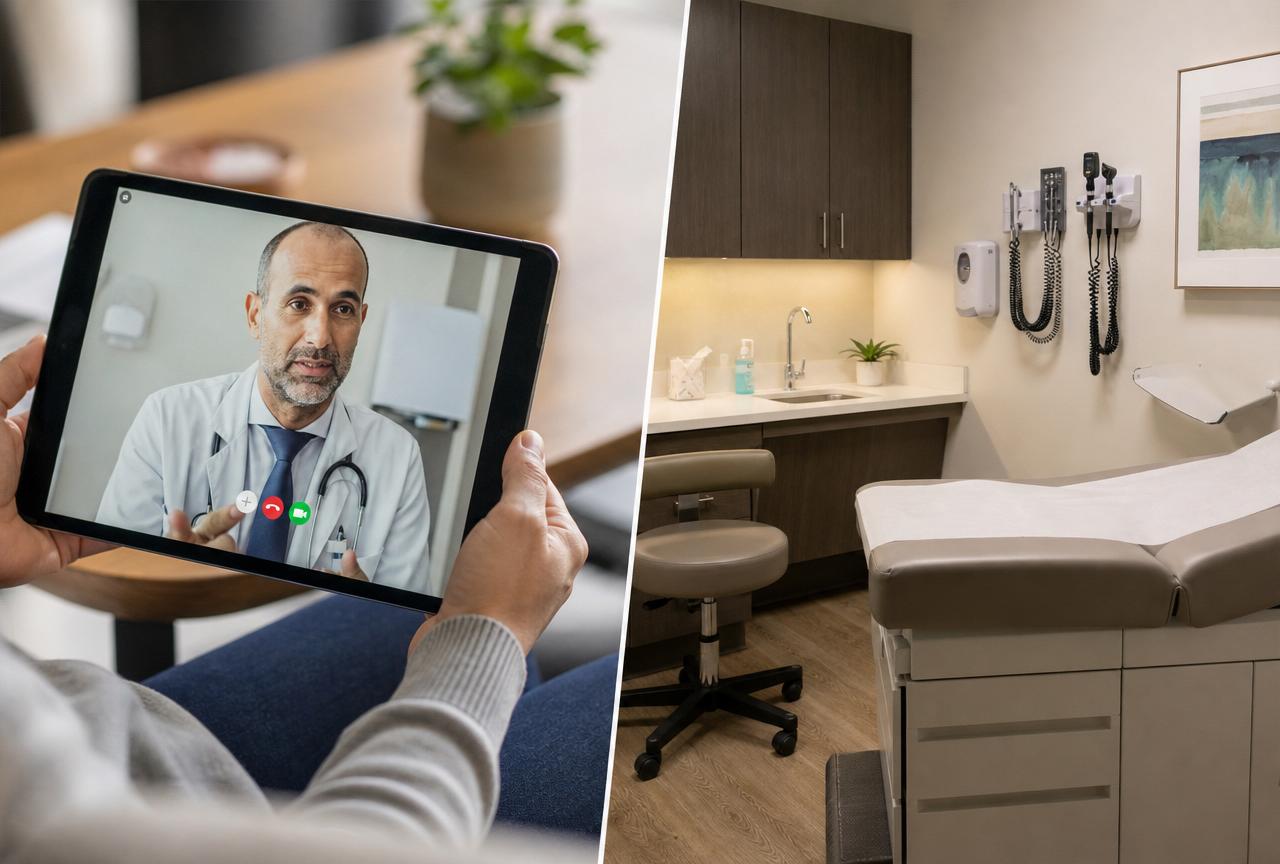
Hybrid GLP-1 Weight Loss Care: Telehealth + In-Person Model
Hybrid Care for GLP-1 Weight Loss: Why the Best Programs Blend Telehealth With In-Person Visits
The first wave of GLP-1 telehealth looked simple. Fill out a form, have a short video visit, get a prescription shipped to your door. For a lot of people, that was the unlock that finally made weight loss care accessible. But six years into the GLP-1 era, the clinical picture has gotten more complicated. The medications are more powerful. The side effects are better understood. And the follow-up needs are higher than most video-only programs can handle alone.
That is why the best GLP-1 programs in 2026 are hybrid. They use telehealth for everything it is good at: speed, access, frequent touchpoints, easy refills, fast side effect triage. And they pair it with in-person visits for the things that actually need a room, a scale, a blood draw, or a hands-on exam.
Here is how to think about hybrid care, what it solves, and what to look for in a program that does it well.
1\. What "Hybrid Care" Actually Means for GLP-1 Weight Loss
Hybrid care is not a video call with an occasional lab order. It is a deliberate care model that splits your GLP-1 journey into virtual and in-person touchpoints based on what each visit is trying to accomplish.
Virtual visits handle the high-frequency, lower-acuity work. That includes dose escalation decisions, side effect management, medication refills, nutrition and hydration coaching, and ongoing check-ins during the early months when questions pile up fast. These are the moments where waiting two weeks for an office appointment would actively slow your progress.
In-person visits handle the work that needs a physical space. Baseline labs and periodic re-checks. Body composition analysis so you can see whether you are losing fat or also losing lean mass. Blood pressure and heart rate measured with calibrated equipment. A physical exam if something new shows up, like abdominal pain, a thyroid nodule, or a rash. These are the checkpoints that protect you from the kinds of complications that do not show up on a video screen.
Done right, hybrid care feels like one continuous program. You do not bounce between two disconnected clinics. Your telehealth clinician sees your lab results. Your in-person provider sees your dose history and your symptom notes. The handoffs are quiet because the record is shared.
2\. Why Video-Only Programs Are Hitting Their Limits
Telehealth-only GLP-1 programs work for a lot of patients, especially early in treatment when the medication is new and the goal is just getting started safely. But several gaps have become clear as more patients move into month six, month twelve, and beyond.
The first gap is lab timing. Kidney function, liver enzymes, A1C, lipids, and thyroid markers all matter on a GLP-1. Video-only programs often send a lab slip and hope the patient follows through. Completion rates are lower than they should be, and when labs are missed, dose decisions get made with incomplete information.
The second gap is body composition. The scale is not enough. Rapid weight loss on a GLP-1 can include meaningful lean mass loss if protein intake and resistance training are not protected. A DEXA scan, a BIA measurement, or even a careful circumference tracking protocol gives you data that a video visit simply cannot produce.
The third gap is the physical exam. Most GLP-1 side effects are manageable over video. A few are not. Gallbladder pain, suspected pancreatitis, a new thyroid lump, unexplained abdominal tenderness, dehydration with orthostatic changes. These warrant hands-on evaluation or at least a low-friction way to get to one quickly.
The fourth gap is trust. Patients on long-term GLP-1 therapy often want to see the same team, in person, at least occasionally. That relationship is hard to build through a screen alone.
3\. What a Well-Designed Hybrid GLP-1 Program Includes
If you are choosing a program or evaluating the one you are in, the hybrid model should include a specific set of components. Not every program will call them by the same name, but the substance should be there.
Baseline in-person or lab-based intake. A full lab panel before you start. Vitals with real equipment. A weight and body composition baseline. A medication review. A documented plan for the first 12 weeks.
Frequent virtual touchpoints in the first 90 days. This is when side effects peak and dose changes happen most. You want access to a clinician within a day or two, not a month out.
Scheduled lab rechecks. Typically every three to six months, depending on your starting risk profile. Kidney function, liver enzymes, A1C, lipids. Thyroid if indicated. Adjusted to your specific history.
Body composition check-ins. Ideally every three to six months during active weight loss. This is how you catch lean mass issues early and adjust protein intake, strength training, or dose strategy before they become a problem.
A clear escalation path. If something concerning happens between visits, there is a defined way to get a same-day virtual visit, a lab order, or an in-person exam. You are not left searching for urgent care.
Maintenance phase planning. Hybrid care should also think about what happens after you reach your goal. That includes tapered visit frequency, maintenance dosing discussions, and the eventual transition off medication if that is part of your plan.
4\. Who Benefits Most From Hybrid Over Telehealth-Only
Every patient on a GLP-1 benefits from some hybrid element, even if that just means getting labs drawn at a local site. But several groups benefit disproportionately.
Patients with pre-existing conditions. Type 2 diabetes, chronic kidney disease, fatty liver, thyroid history, gallbladder history. These situations call for more frequent labs and at least occasional in-person evaluation.
Patients with significant weight loss goals. If you are losing more than 15 percent of body weight, body composition tracking becomes important. Protein intake, strength training, and possibly dose adjustments depend on knowing what is actually happening in your body, not just what the scale says.
Patients who have had side effects. Anyone with a prior episode of pancreatitis, gallbladder disease, severe GI symptoms, or unusual reactions should not be managed by video alone. Those patients need a lower threshold for in-person evaluation.
Patients in maintenance. Once the weight is off, the questions shift. How long to continue medication. Whether to taper. How to protect muscle mass over the long term. These are conversations where a sustained relationship with a clinician, in person when needed, matters more than one-off video visits.
5\. How to Evaluate a Hybrid Program Before You Enroll
Not every program that calls itself hybrid actually delivers it. A short checklist of questions will separate the real ones from the marketing.
- Do you order baseline labs before the first prescription, and do you require them for dose escalation? - How often are labs repeated during the first 12 months? - Do you track body composition, not just weight? - If I have abdominal pain, a suspected gallbladder issue, or a new thyroid finding, what happens next? - Can I reach a clinician within 24 to 48 hours for urgent concerns? - Is there an in-person option, either at your clinic or through a partner network, for exams and labs? - What is your plan for the maintenance phase after I hit my goal?
A program that can answer those questions crisply, in writing, is serious about hybrid care. A program that gets vague is giving you telehealth-only with extra branding.
Why Hybrid Care Is Crucial for Safe, Effective GLP-1 Weight Loss
GLP-1 medications are powerful tools, and they are not going away. What is changing is how we deliver the care around them. The old model of a quick video visit and a refill worked for the initial rollout. It is not enough for the kind of long-term, safety-conscious, outcome-focused care that most patients actually need.
Hybrid care gives you the best of both. The speed and access of telehealth for the frequent touchpoints. The depth and precision of in-person visits for the checkpoints that matter most. Programs built on that foundation tend to produce better weight loss results, fewer complications, and more durable outcomes once you reach maintenance.
If you are starting GLP-1 therapy, or if you have been on it for a while and feel like your program is not keeping up, hybrid care is worth asking about. The right mix of virtual and in-person visits can turn a good medication into a sustainable weight loss journey.
_StemVera Health offers clinician-guided GLP-1 weight loss programs with hybrid care options. If you want a program that combines fast telehealth access with real in-person checkpoints, start by booking a consultation with our clinical team._
Frequently asked questions
Related treatments
Explore the clinician-supervised programs StemVera offers for the conditions and medications discussed in this article.